
Solutions · Service & Support
Service and Support: We take care of the rest.
Retrofit in around an hour. We take over support after that.
Setup time approx. 1 hour · For end customers and system integrators · From pilot phase to full-scale operation · Manufacturer-independent integration
Process monitoring is only valuable when it is up and running: reliably, with the correct parameter settings, and with a designated contact person available should the application change.
Service and support cover both aspects: integration into your existing system and ongoing operation thereafter.
Whether you are an end customer or a plant manufacturer.
Performance • Support
What service and support deliver in practice
Three operational areas of activity that simultaneously address service and support:
Integration without production downtime
Many companies shy away from retrofitting a monitoring system because they fear a prolonged production stoppage.
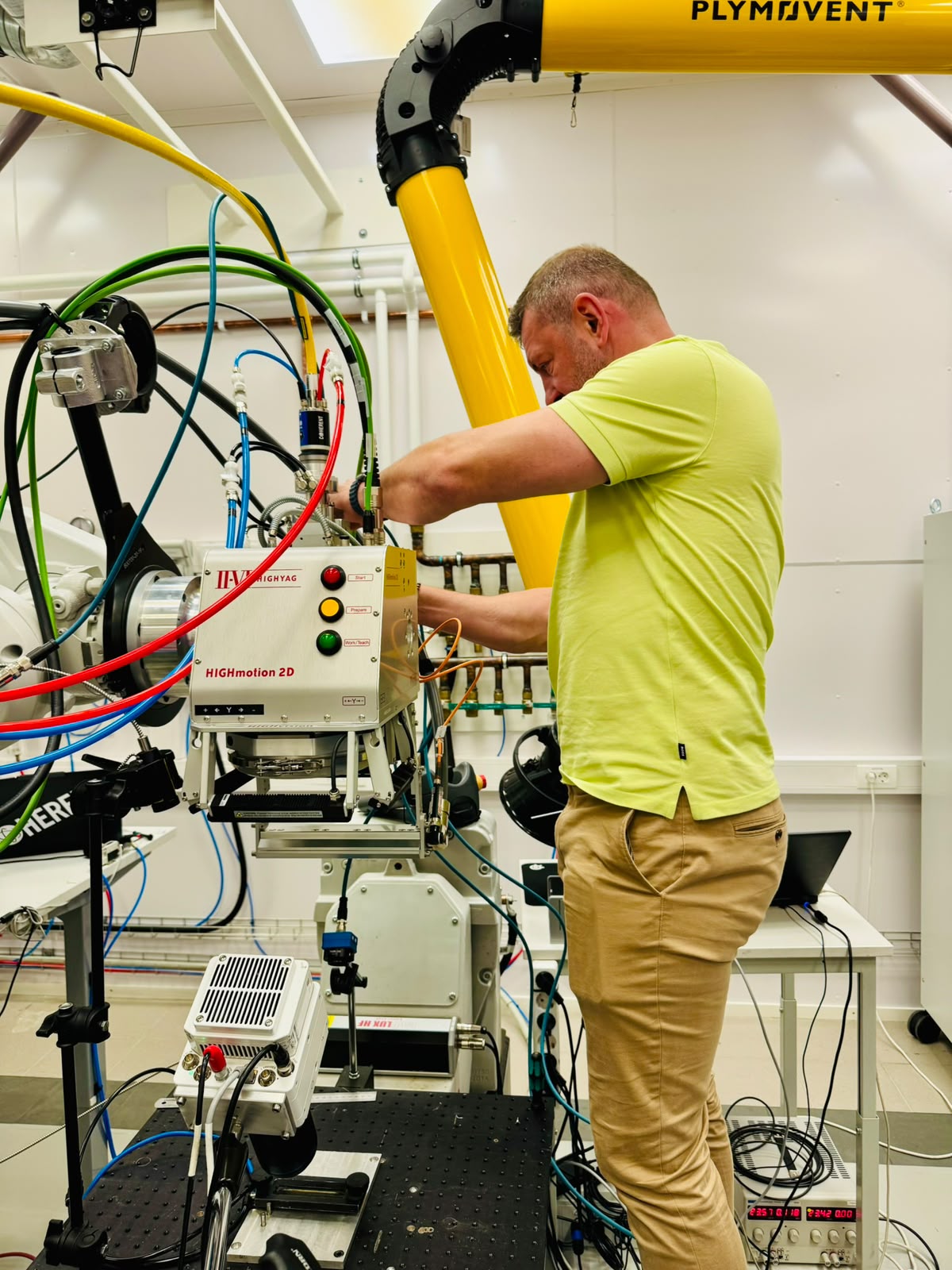
Integrating the sensor into an active cell typically takes around an hour; production then continues, and we take care of the rest.
For end customers & plant manufacturers
Plant manufacturers often receive process monitoring specifications from the end customer without seeing the full benefit themselves; nevertheless, the integration must proceed smoothly.
Whether retrofitted directly at the end customer's site or planned into new installations with the system manufacturer, the integration process is designed to accommodate both approaches.
From trial unit to series production
Many systems work in pilot trials but fail when rolled out to additional lines or locations.
The integration process is designed for scalability from the outset, from the initial test to the rollout to additional facilities.
Performance • Support
We'll take care of the rest.
Integration is our task, not your side job.
Following the one-hour sensor integration, we handle parameterization, fine-tuning, and ongoing support. Your production continues while we set up the system.
This applies to the test setup just as it does to the production system; in both cases, the effort required on your part remains manageable.
Supporting pillars
Three qualities that distinguish our service
Three operational areas of activity that simultaneously address service and support:
- Pillar 1 33%
Photodiode instead of extensive calibration effort
No special alignment, no calibration, that’s why it’s faster.
The sensor system is deliberately designed to allow for integration without complex adjustment. That is the main reason why one hour of downtime is realistic.
Simplicity in technology directly reduces integration time.
- Pillar 2 66%
Scheduled downtime
Around one hour for sensor integration into an active cell.
For a permanently installed system intended to operate for years, a longer initial integration period is usually acceptable; nevertheless, the standard duration remains around one hour.
Production will then resume, while we handle the rest.
- Pillar 3 100%
Two Paths to Integration
Retrofitting at the end customer's site or collaborative planning with the plant manufacturer.
Most customers plan their quality assurance systems well in advance, allowing the sensor technology to be integrated directly by the system manufacturer during setup rather than being retrofitted later.
Both paths lead to an operational process monitoring system.
Step by step
From inquiry to series production
Step by step. You always know where you stand and what the next step is.
Initial consultation
15-Minute Assessment: Does our solution align with your strategy?
Scoping
Clarify critical process steps, the existing data basis, and the desired operating model.
Piloting
Trial installation or proof of concept, usually on an active production line.
Integration
Sensor integration in around one hour. Training for your staff.
Serial Production
In-line data acquisition per component: documented and traceable
Scaling
Additional lines, additional locations using the same integration approach.
Integration
Integration Services – integrated into existing manufacturing architectures
Four service components that give concrete form to the “integration” step in the process outlined above.
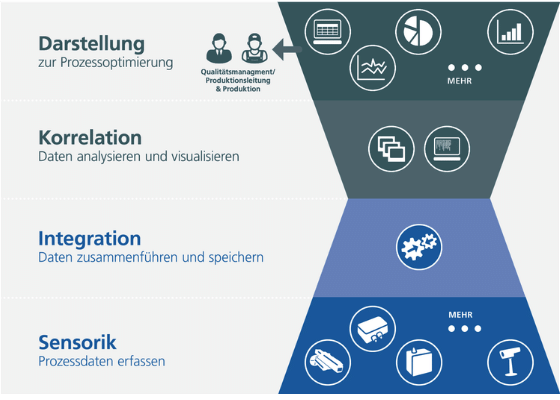
Whether retrofitting an existing cell or collaborating with the system integrator on a new installation, integration is achieved via open, documented interfaces rather than specialized solutions.
System integration
Sensor integration into existing or new cells — retrofit-compatible, around one hour of downtime.
Interface setup
REST API, OPC UA, and common fieldbus protocols — for details, see PROMOS, Layer 03.
Customizer
Sensor integration into existing or new cells; retrofit-compatible; approximately one hour of downtime.
Rollout Support
From the initial pilot line to scaling up to additional facilities and sites.
Request an integration meeting
Operations
Support channels
Support doesn't end with integration: it is part of the platform, not an add-on purchase.
Remote Support
Remote access for parameterization, troubleshooting, and adjustments without an on-site visit.
On premise service
Directly at the system when needed, for instance, during trial setups or complex integration scenarios.
Education
Instruction of your staff in operation, data analysis, and parameterization.
Ongoing Support
Fine-tuning of the evaluation logic when processes or requirements change.
Next Steps
Ready for the initial consultation?
In 15 minutes, we’ll determine whether our solution fits your line, with no obligation and no sales pressure.
If it’s a good fit, scoping and piloting follow. If not, we will tell you so honestly.
 English
  German